How to Clean Slippery Green Algae Off Steps and Walkways
Vinegar Wash
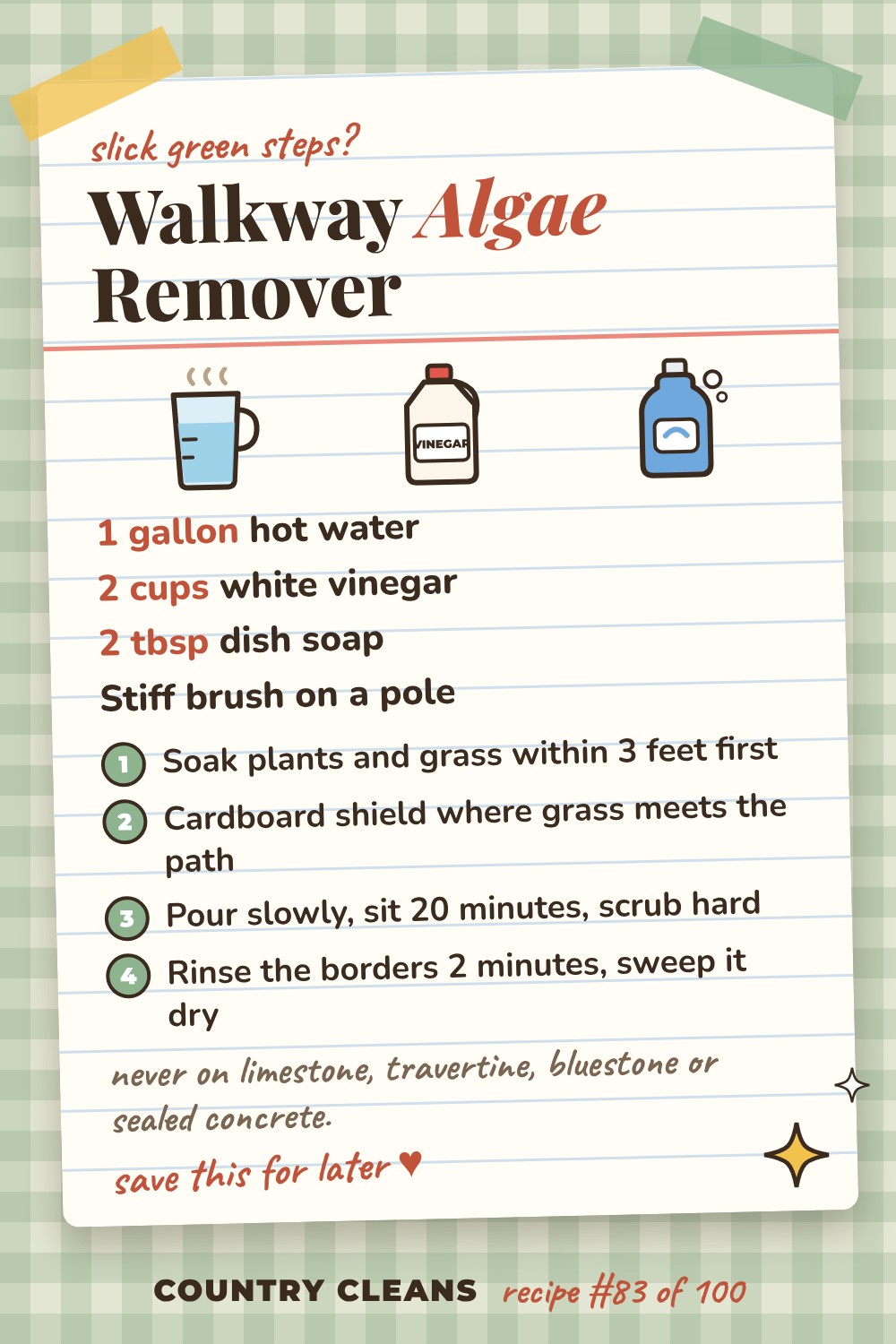
Combine 1 gallon hot water and 2 cups white vinegar in a watering can and swirl in 2 tablespoons dish soap. Soak every plant and grass edge within 3 feet first and lay cardboard along the edge as a shield. Pour slowly over one section, let it sit 20 minutes, scrub hard with a stiff brush and rinse. Rinse the borders a full two minutes and sweep the path dry. Not on limestone, travertine, bluestone, unsealed stone, stamped or sealed concrete.
You need
- 1 gallon hot water (3.8 L)
- 2 cups white vinegar (475 ml)
- 2 tablespoons dish soap
- Stiff nylon scrub brush on a pole
- Watering can with the rose head removed, or a bucket
- Garden hose
- Flat cardboard or a plastic sheet
Mix it
- Combine the hot water and vinegar in the watering can.
- Add the dish soap and swirl it in. The soap is a wetting agent, it keeps the solution sitting in contact with the algae instead of running off the slab.
Use it
- Soak every plant, grass edge and flower bed within 3 feet of the path until the soil is saturated. This is mandatory. Vinegar will brown grass blades it lands on undiluted.
- Lay the cardboard along the edge of the path as a shield anywhere the grass grows right up to the concrete.
- Pour the solution slowly over one section at a time and let it sit for 20 minutes. The algae will start turning from green to brown.
- Scrub hard with the nylon brush, then rinse the section with the hose while moving the cardboard shield along with you.
- Rinse the entire border of the path, plants and all, for a solid two minutes when you finish. Sweep the path dry so it does not stay damp and reseed itself.

This is 1 of 100 mixes in the Mix Book
Glass, wood, bathrooms, mold, kitchens, carpet, couches, laundry, floors, metal, odors and more. Every one with the same exact amounts, steps and warnings. A PDF in your email within a minute.
GET THE MIX BOOK · $12.99
Free: Dale's Fall Deep-Clean Checklist
19 jobs to do before the house closes up for winter, room by room, plus 3 recipes printed in full. Print it and stick it on the fridge.
SEND ME THE FREE CHECKLIST