How to Clean Marble and Natural Stone Floors
No Vinegar, pH Neutral
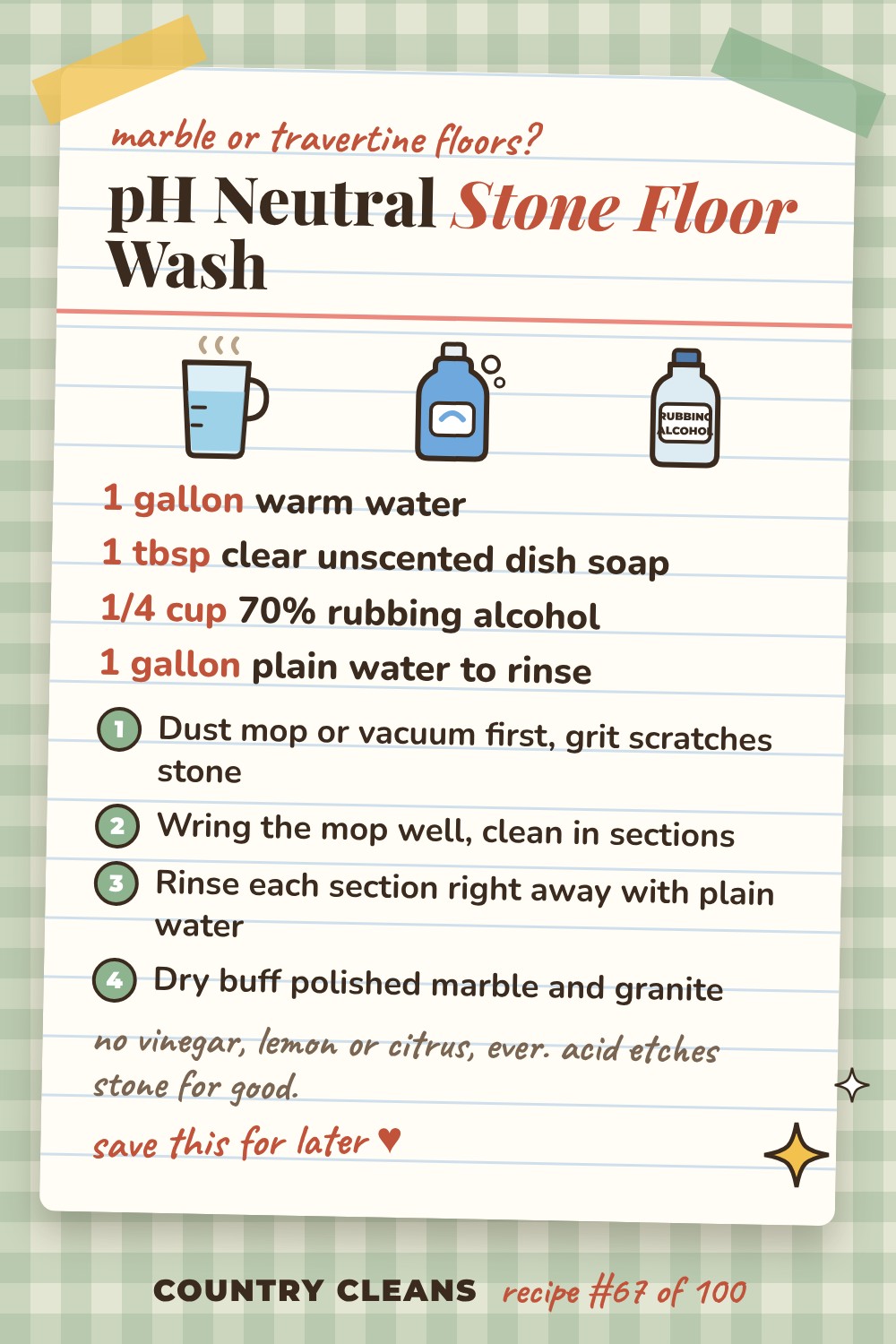
Marble, granite, travertine, limestone or slate floor? Fill a bucket with 1 gallon warm water, 1 tablespoon clear unscented dish soap and 1/4 cup 70% rubbing alcohol, and keep a second gallon of plain water to rinse. Dust mop first, clean in sections with a well wrung microfiber mop, rinse each section right away and dry buff polished stone. Never vinegar, lemon or citrus: acid etches stone for good.
You need
- 1 gallon warm water (3.8 L)
- 1 tablespoon clear, unscented, dye-free liquid dish soap
- 1/4 cup 70% isopropyl rubbing alcohol (60 ml)
- 1 gallon plain warm water (3.8 L) in a second bucket for rinsing
- Soft microfiber mop, no scrub pads, no brushes
Mix it
- Fill bucket one with the warm water.
- Add the dish soap and stir gently with the mop handle.
- Add the alcohol and stir once more. Alcohol is pH neutral and just speeds drying on polished stone so you do not get water marks.
- Bucket two stays plain water.
Use it
- Dust mop or vacuum first. Stone shows every scratch and grit is what makes them.
- Wring the mop out well and clean in sections, overlapping your strokes.
- Rinse pass with the plain water bucket immediately after each section. Any soap left on polished stone builds a dull film fast.
- Dry buff with a clean dry microfiber on polished marble and granite. On honed travertine or slate you can let it air dry.
- If a spill happens between cleanings, blot it, do not wipe it, and rinse the spot with plain water.
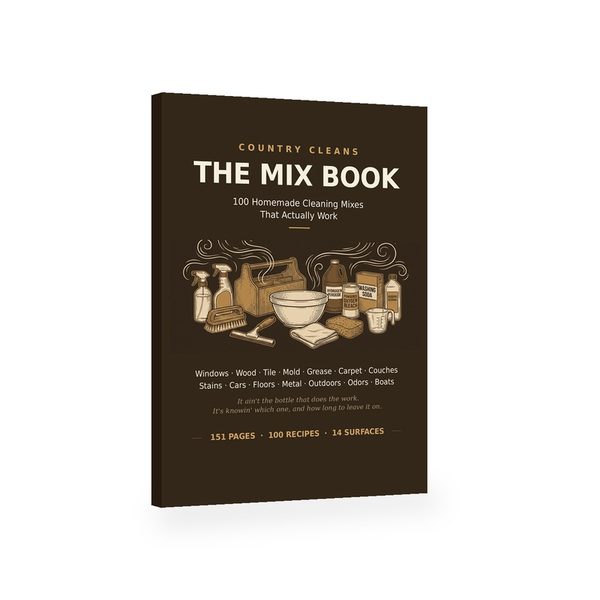
This is 1 of 100 mixes in the Mix Book
Glass, wood, bathrooms, mold, kitchens, carpet, couches, laundry, floors, metal, odors and more. Every one with the same exact amounts, steps and warnings. A PDF in your email within a minute.
GET THE MIX BOOK · $12.99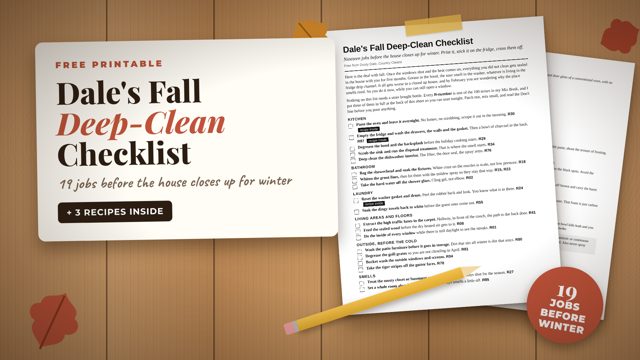
Free: Dale's Fall Deep-Clean Checklist
19 jobs to do before the house closes up for winter, room by room, plus 3 recipes printed in full. Print it and stick it on the fridge.
SEND ME THE FREE CHECKLIST